

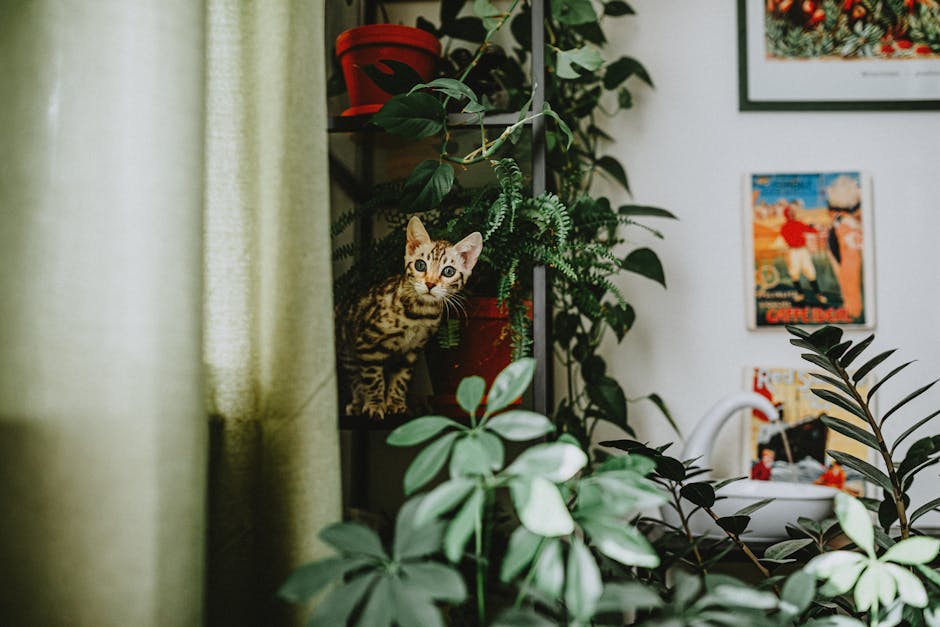
One surprising thing I learned the hard way: the safest “easy” houseplants can still become a medical issue if your pet treats them like chew toys. In my home, the first plant casualty wasn’t a dramatic poison—it was a plain potting mistake that led to mouth ulcers after repeated nibbling. That experience is why I’m obsessive about pet-friendly home plants: not just what’s “toxic,” but what’s safe for real-life routines—watering days, repotting, and curious paws.
Direct answer: Choose plants that are known to be pet-friendly (like Boston fern, spider plant, and many palms) and avoid common offenders (like lilies, sago palm, and pothos). Then set up “plant-proofing” so your pet can’t access soil, fallen leaves, or chewable stems. This guide gives you a practical, pet-safe plan you can use today.
Note: No plant list is perfect across every cultivar and region. Always confirm with your vet if your pet actually ingests a plant or if you’re unsure about a specific species or variety.
What “pet-friendly” really means for home plants
Pet-friendly home plants are plants that are far less likely to cause serious poisoning if your cat or dog chews or ingests small amounts. “Non-toxic” is a common label, but in practice, pet safety also depends on dose, your animal’s size, and how your pet behaves around plants.
In veterinary terms, the risk usually comes from one (or more) of these categories: gastrointestinal irritation, kidney/liver toxicity, or specific organ-targeting toxins. Even a plant that’s considered safe can cause vomiting or drooling if your pet eats enough of it or reacts to plant fibers.
Here’s what I recommend you do in 2026 as a best-practice routine: treat plants like kitchen ingredients. You can still enjoy them, but you control access and you manage “incidental exposure” (fallen leaves, dripping water, and soil). That approach prevents most emergencies.
Quick safety rules: how to protect pets from houseplant incidents
The fastest way to reduce risk isn’t memorizing toxic plant lists—it’s changing the home environment. Use these rules and you’ll handle 90% of real-world incidents before they happen.
- Stop access to soil: Top-dress with aquarium-safe gravel or use a decorative cachepot with no drainage access to pets.
- Secure watering: Water over a sink or with a tray that fully contains runoff. Many “poisonings” are really repeated mouth contact with wet soil.
- Pick placement like a trainer: Put “high-interest” plants on high shelves or behind baby gates. If your pet can reach it with a leap, it’s reachable.
- Remove fallen leaves daily: Cats love to hunt little green pieces on the floor. Make cleanup part of your plant care routine.
- Have a plan for ingestion: Keep your vet number and your local emergency clinic saved. Time matters because symptoms can escalate quickly.
If you want a behavioral angle, this pairs well with training routines you already use for pet training: interrupt the chewing habit and redirect to a safe alternative (more on that later). If you’re building a “replacement habit,” your results are usually faster than trying to remove every plant from your home.
Explore more pet training strategies for preventing unwanted chewing (we cover practical redirection and reinforcement schedules in our Pet Training category).
Top pet-friendly home plants (safer picks for cats and dogs)
Pet-friendly houseplants are your best bet when you want greenery without constant anxiety. Below are plants that are widely regarded as safe or significantly safer than common toxic species, along with notes based on typical pet behavior.
Important: “Safe” still means you should discourage chewing. If your pet is an active plant chewer, even safe plants can cause stomach upset from fiber and plant matter.
Spider plant (Chlorophytum comosum)
Spider plants are a favorite because they’re hardy, fast-growing, and usually well-tolerated if nibbling happens. I like them in homes with young dogs because they handle neglect better than most “fragile” houseplants.
Placement tip: Hang baskets work well, but many cats will still reach. If your cat is a climber, keep the basket out of the jump zone.
Boston fern (Nephrolepis exaltata)
Boston fern is a classic “pet-safe” choice for leafy texture lovers. It also encourages you to water regularly, which is good for plant health—just contain runoff.
What most people get wrong: They mist directly on the leaves and forget about slippery fern fronds that pets can knock onto the floor. Wipe drips and sweep daily.
Areca palm (Dypsis lutescens)
Areca palms are generally considered safer than many palms. They also make a statement plant, which means you can keep them in a controlled spot rather than scattered around the home.
My real-world note: Palms tend to hold attention because of their fronds. If your pet chews fronds, choose a placement behind a barrier rather than assuming it’s “safe enough.”
Polka dot plant (Hypoestes phyllostachya)
Polka dot plants are colorful, compact, and often tolerated well. They’re great for apartment setups because you can place them on counters where dogs can’t reach and cats can’t jump.
Care detail: Keep soil evenly moist but not waterlogged. Overwatering can lead to moldy soil, which is a separate pet risk.
Jade plant (Crassula ovata) — with caution
Jade plants are frequently listed as safer, but they’re still succulent material that pets may chew. I include jade because it’s popular—and because the safety strategy is similar: control access and don’t let leaf drop collect on the floor.
Best for: Homes where pets are curious but not persistent chewers.
Christmas cactus (Schlumbergera)
Christmas cactus often lands on “safer” lists and is a fun seasonal addition. Like other succulents, it can still irritate a sensitive stomach if eaten repeatedly.
Placement tip: Avoid windowsills if your cat sunbathes there. Sun + curiosity = repeated leaf checks.
Most non-toxic herbs: basil, parsley, and mint (still manage the access)
Many common kitchen herbs are safer for pets than you’d expect, especially in small amounts. But herbs are also easy chewing targets, and some pets react to strong aromatic oils.
Actionable approach: Keep herbs in sturdy containers, and if your pet is a serious chewer, offer a pet-safe alternative plant (discussed below) rather than “hoping they learn.”
Toxic and high-risk species to avoid (especially lilies and palms)
If you want one takeaway from this section, it’s this: avoid lilies at all costs, and treat “unknown palm” species as a stop sign. Many toxins act fast or target critical organs.
Below are plants that are commonly reported as toxic to cats and/or dogs. Exact severity varies by species and plant part, so the safe move is simply: don’t bring them into a pet home.
| Plant (common name) | Why it’s dangerous | Who’s most at risk | What to do |
|---|---|---|---|
| Lilies (all true lilies: Lilium, Hemerocallis) | Severe kidney toxicity | Cats (very high risk) | Remove immediately; even small ingestion is an emergency |
| Sago palm (Cycas revoluta) | Potent toxin affecting liver | Both cats and dogs | Avoid entirely; keep out of yards and gift bouquets |
| Pothos / Devil’s ivy (Epipremnum aureum) | Oral irritation; GI upset | Both | Avoid chewing access; consider removing if pets are plant-nibblers |
| Philodendron (Philodendron spp.) | Oral irritation and GI symptoms | Both | Avoid if your pet chews leaves; remove from reach |
| Dieffenbachia (Dumb cane) | Severe oral irritation | Both | Avoid entirely—symptoms can escalate quickly |
| Amaryllis (Hippeastrum) | GI and neurologic effects reported | Both | Avoid in homes with free-roaming pets |
| Azalea / Rhododendron | Cardiotoxicity and GI symptoms | Dogs (often) and cats | Avoid; keep landscaping and potted plants separated |
My strongest opinion: “Safe placement” is not a substitute for choosing a safer plant. If you’ve got a cat that can reach the top shelf, or a dog that drags a chair to investigate, you need plant selection that survives real-life behavior—not just real estate assumptions.
People Also Ask: pet-safe plants, cats, and dogs
This section targets the questions I see most often from readers and from people asking at vet clinics.
Are succulents pet-friendly?
Some succulents are listed as safer, but many are not. The biggest issue is that succulents are “chewable” and their sap or fibers can irritate mouths and stomachs.
What I do: I only keep succulents I’ve verified as low-risk and I treat them like fragile toys—no floor debris, no accessible potting mix, and no leaves within reach of repeat chewers.
Can cats eat spider plants safely?
Spider plant is one of the more commonly recommended pet-friendly plants. Cats still may get mild GI upset if they eat a lot, so you shouldn’t encourage it.
Practical move: If your cat bites leaves repeatedly, redirect to cat grass. I’ve seen this stop “plant fixation” faster than removing every leaf and hoping the behavior stops.
What houseplants are toxic to dogs?
Many of the most reported toxic houseplants can affect dogs, including lilies, sago palm, dieffenbachia, and certain flowering ornamentals. Dogs are also riskier because they chew and ingest more of the plant material.
Training connection: Use chew-prevention strategies—like structured chew toys and supervision—so your dog doesn’t practice plant chewing.
Is it safe to keep cut flowers like lilies in the home?
For cats, lilies are unsafe even as cut flowers because pollen and contact with petals can be enough to cause serious harm. If lilies are in a bouquet, keep your cat out of the room entirely and remove the flowers from your home if possible.
Emergency threshold: If ingestion happens or you suspect exposure, contact your veterinarian right away.
How to build a pet-friendly plant setup (a step-by-step checklist)
This checklist is what I’d do again if I were redesigning my home for pets tomorrow. It’s concrete, fast, and reduces risk without turning your living space into a sterile showroom.
-
Inventory your plants
Make a list with photos of each plant (front and pot label). Unknown plants are riskier than “known toxic” plants because you can’t verify quickly during an emergency.
-
Sort into 3 buckets
- Verified pet-friendly
- Conditional (listed as safer but behavior-dependent)
- Avoid (lilies, sago palm, and other high-risk species)
-
Contain soil
Use a cachepot with a stable inner pot. Consider a no-access planter stand for cats, especially if your pet loves to investigate water trays.
-
Plan for fallen leaves
Routinely wipe surfaces near plant zones. I do a quick 2-minute sweep after watering days because that’s when leaves and bits end up on the floor.
-
Add a safe “replacement plant”
Cat grass is the most common swap. It gives your cat a chewing outlet so your houseplants stop being the novelty snack.
-
Set up a monitoring routine
For the first 7–14 days with a new plant, supervise and observe. If your pet targets it, don’t argue with the pattern—move the plant or switch it out.
If you need a framework for habit change, this pairs well with training basics like reward timing and redirection. For more on that, see our guide on training routines that reduce unwanted chewing.
What to do if your pet chews or eats a plant
Even with great planning, accidents happen. The goal is to respond quickly and consistently based on symptoms.
Step 1: Assess exposure safely
Remove remaining plant material from your pet’s mouth if it’s accessible and safe to do. Don’t try to induce vomiting unless your veterinarian instructs you to do so.
If you can, identify the plant (photo the pot or leaf). Many clinics ask for the plant name and whether it was eaten from indoors or outdoors.
Step 2: Watch for red-flag symptoms
Seek urgent care if you notice drooling, repeated vomiting, weakness, blood in stool, difficulty breathing, seizures, or severe lethargy. For cats exposed to lilies, treat it as an emergency even if symptoms look mild.
For dogs, chewing plus drooling or persistent pawing at the mouth is a common sign of oral irritation and GI upset.
Step 3: Contact your vet with the right details
Have these details ready: your pet’s weight, what plant you suspect, approximate amount eaten, time of ingestion, and current symptoms. If you’re in the U.S., many pet poison hotlines operate with per-case guidance fees; your vet may direct you to one.
Cost reality check (from clinic experience): Most “plant ingestion” emergencies involve shorter diagnostic pathways than toxin mysteries like certain rodent poisons. Still, the exam and monitoring can range from modest to significant depending on symptoms—so prevention is always the cheaper option.
Common mistakes people make with pet-friendly home plants
This is where most households accidentally sabotage themselves. You don’t need perfection—you need to avoid predictable errors.
- Using “toxic” as a binary word: Many plants are not instantly fatal but still cause vomiting, drooling, or mouth swelling.
- Assuming “pet-safe” means “chew-approved”: Safer plants can still be irritating in large amounts.
- Forgetting about the floor: Pet risk often happens when leaves fall or when potting soil is disturbed.
- Buying a plant because it’s trending: Trends move faster than safety verification. Check before you bring it home.
- Not updating your plan in 2026: Pet behavior, household routines, and plant availability change. Re-check your plant list if you adopt a new pet, get new roommates, or remodel.
One original insight from my own household: when I started tracking “plant interest” like a training behavior—what time it happened, what triggered it (boredom, sunlight, new smells)—we reduced incidents without removing half our plants. The key was noticing that our cat’s nibbling wasn’t random; it peaked right after we watered or when we brought in new items.
Best pet-friendly home plants by lifestyle (choose based on your reality)
Not every pet-friendly plant fits every home. Match the plant to your routine and your pet’s habits.
If you have a curious cat who climbs
Pick plants that are easy to fence out. Spider plants (hung high only if truly out of jump range), palms in sturdy corner stands, and compact pet-friendly options placed behind barriers are usually better than fragile trailing plants.
Pro strategy: Use a tall plant stand with a flat top and a barrier back panel. Cats often hesitate when they can’t “land comfortably” while approaching.
If you have a dog that “samples” everything
Go for plants that are less chew-attractive and place them in rooms with supervised access. Boston fern and thick-leaf plants can still be targets, so prioritize containment and monitoring, not just species safety.
If your dog has a history of chewing household items, treat plants as part of that behavior chain and address it with structured training (chew toys, enrichment, and supervision).
If you’re busy and sometimes miss watering
Choose hardy pet-friendly plants like spider plant or certain resilient palms. Plant stress affects leaf quality and can increase drop-off, which increases floor debris and pet interest.
In 2026, I’ve found many pet parents do better with simple automation: a basic moisture meter and a reminder app beat guesswork. Less stress for you usually means more consistent cleanup, which is what protects your pet.
Featured image SEO note
Image alt text (for your featured image): “Pet-friendly home plants like spider plant and Boston fern safely placed away from pets”
Internal links you may find helpful
- Pet training tips to stop chewing and redirect to safe alternatives
- Animal health basics: signs of mild vs. urgent poisoning
- Pets & Home Lifestyle: creating safe enrichment zones for cats and dogs
Conclusion: Make your home greener without gambling on safety
Pet-friendly home plants are absolutely doable—you just need a system. Choose safer species (and avoid high-risk plants like lilies and sago palm), then control access to soil and fallen leaves, and redirect chewing to true safe alternatives.
If you do only one thing today, do this: write down your plant names, take photos of each pot, and move anything questionable out of reach. That quick action turns plant safety from a daily worry into a one-time setup—exactly the kind of pet care win I love.